

Journal
The Art of Slowing Down: A Guide to Wellness Travel Done Right

There is a particular kind of tiredness that no amount of sleep fixes. A flatness that lingers even after a week away — because somewhere between the flight and the poolside cocktails, nothing actually changed. You brought the same pace. The same notifications. The same urgency.
Wellness travel, when it is done thoughtfully, offers something different. Not a detox programme or a morning run you feel obligated to complete. Something quieter. A recalibration. A return to rhythm.
Here is how to make it real.
Start before you arrive
The transition into stillness rarely happens the moment you step off a plane. It takes time — usually a full day, sometimes two — before the nervous system genuinely settles. Knowing this changes everything.
Begin the shift before you leave. Reduce the number of decisions you make in the 48 hours prior to departure. Limit screen time in the evenings. Sleep well the night before. Arrive at the airport with time to spare. These are not minor details. They are the beginning of the experience.
When you reach your destination, resist the instinct to fill the first afternoon. Let it be unstructured. Walk without a route. Eat when you are hungry. Sleep if you need to. The rhythm of the place will reveal itself on its own terms.
Move in a way that suits the landscape
True wellness movement is not about calorie counts or fitness goals. It is about relationship — with the body, with the environment, with the pace of a place.
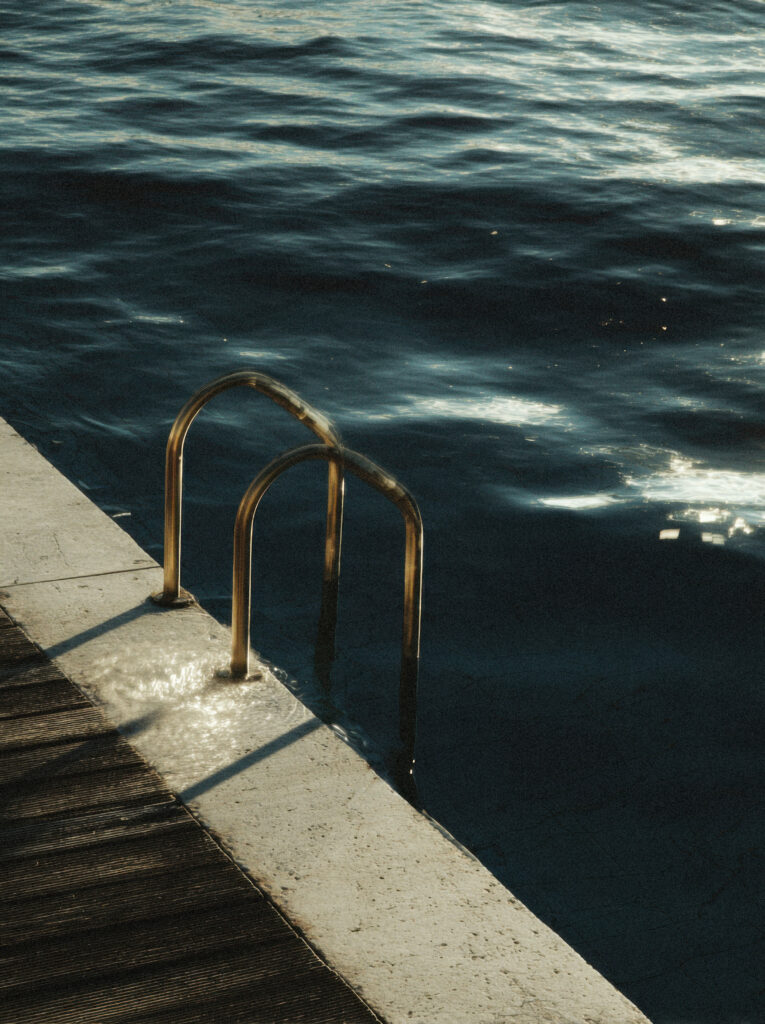
Swimming in open water is one of the most underrated wellness practices available in coastal destinations. The combination of cold exposure, breath regulation, and the quality of attention required to navigate natural conditions creates a state of presence that no gym can replicate. Even a short morning swim in the sea changes the texture of a day.
Walking deserves more credit than it receives. Not power walking, not hiking with an objective — just walking. Through a village, along a coastal path, into the hills at dusk. The act of moving at a pace where you notice detail is itself a form of mindfulness. Studies in environmental psychology consistently show that time in green and blue landscapes reduces cortisol levels and activates the parasympathetic nervous system. This is the science behind something most of us already know intuitively: nature helps.
Yoga, Pilates and breathwork are increasingly available at quality destinations — and when practised outdoors, in the early morning before the heat builds, they become something different entirely. If your destination offers outdoor sessions, prioritise them over the studio version.
“Stillness is not the absence of movement. It is movement that belongs to the place.”
Eat with intention, not restriction
Wellness eating is not about elimination. At its best, it is about proximity — to the land, to the season, to the people who grew, fished or prepared what is on your plate.
Seek out local markets. Not for Instagram, but to understand what is actually in season in this place, at this time. The produce here will be different from home. Follow that difference.
Mediterranean and Aegean food cultures offer some of the world’s most naturally wellness-aligned eating: olive oil, legumes, seasonal vegetables, grilled fish, fresh herbs. Not because these cultures designed a diet, but because they ate from what was available. This is worth noticing.
Eat slowly. It sounds obvious, but the pace of a meal — the time between courses, the absence of screens, the quality of conversation — is itself a wellness practice. Some of the most restorative moments in travel happen at a table with good food and no particular place to be.
Hydration is easily overlooked in warmer climates. Drink more water than you think you need. Limit alcohol in the first few days, not for puritanical reasons, but because it disrupts the quality of sleep you are there to recover.
Rest as an active practice
We have largely forgotten how to rest. Not sleep — most people are familiar with exhaustion — but true rest. The kind that requires doing nothing useful.
Lie in a hammock with no phone. Sit outside and watch the light change. Reread a book you already love. These activities have no productivity value and enormous restorative value.
A siesta culture exists for good reason. In hotter climates, the early afternoon is not designed for activity. Follow local wisdom. A 20-30 minute rest after lunch is not laziness; it is adaptation. You will feel the difference in the quality of your evenings.
If your destination includes a spa, treat it as ritual rather than luxury. Arrive early. Move slowly through the spaces. A hammam, a sauna, a cold plunge — these are not performance experiences. They are about thermo-regulation, circulation and the kind of bodily awareness that comes from slowing down enough to notice what you feel.
Protect your mornings
The morning is the most valuable part of a wellness-focused day — and the most easily squandered. Before anyone else is awake, before heat, before obligation, there is usually an hour of extraordinary quality available.
Use it on your own terms. That might mean sitting outside with coffee and absolute silence. It might mean a slow swim, a walk, a journal, a meditation. What it should not mean is email.
Consider a digital morning fast: no phone until after breakfast. The quality of the first few hours of the day shapes everything that follows. Protect them.
Know when to leave the destination behind
Even the most considered destination benefits from context. A wellness stay that exists entirely within the villa or hotel property is only half of what is possible.
Engage with the place around you. Visit a local thermal bath or natural hot spring if one exists. Find the fishermen’s café where no tourist has wandered yet. Attend a local market at dawn. Walk to the nearest village and have lunch at the only table outside.
These moments of genuine encounter with a place and its people are not interruptions to wellness travel. They are, in many ways, the point.
“The most restorative destinations are the ones that ask nothing of you — and quietly give back everything.”
A note on what to leave at home
The itinerary mentality is the enemy of rest. When every hour is scheduled, the nervous system never truly releases. Leave room for nothing. Actual nothing — not “quiet time” between activities, but days where you wake up with no particular plan and follow the morning.
Leave the fitness tracker at home, or at least in a drawer. Measuring your heart rate variability while lying in a hammock is a form of resistance to the very thing you came for.
The most important wellness practice is permission. Permission to arrive slowly. To need nothing. To let a destination work on you without managing the experience.
That is something no programme can schedule. But the right place makes it remarkably easy to find.
Discover our Destinations
Bold
Uluwatu, Bali
Baia
Uluwatu, Bali (opening August 2026)
Zumaïa
Uluwatu, Bali (opening March 2028)
Heritage Villas
Uluwatu, Bali
Heritage Hotel
Uluwatu, Bali (opening August 2027)
Ungu
Uluwatu, Bali (opening September 2027)